
The 10 Ways I Use ChatGPT as an Artist
I’m lucky I was an early adaptor of ChatGPT because my husband, Ryan, is in the tech industry. He was using it in early 2024 when no one had any idea what it was. And I learned so much just by paying attention to what he was doing. While I’m not nearly as skilled in AI as he is, he taught me one thing that really resonated with me - the more creative you can be in how you use it, the better your results will be.
The tough part isn’t figuring out how it works, it’s brainstorming the best ways to get what you want out of it. And brainstorming is one thing I’m good at.
So here are all the ways I’ve used ChatGPT as an artist, in case any of these ideas haven’t occurred to you. Hopefully at least one resonates and helps you reach your goals, whether that be simply making more art this year or even selling more art online.
1. Art Supplies Recommendations
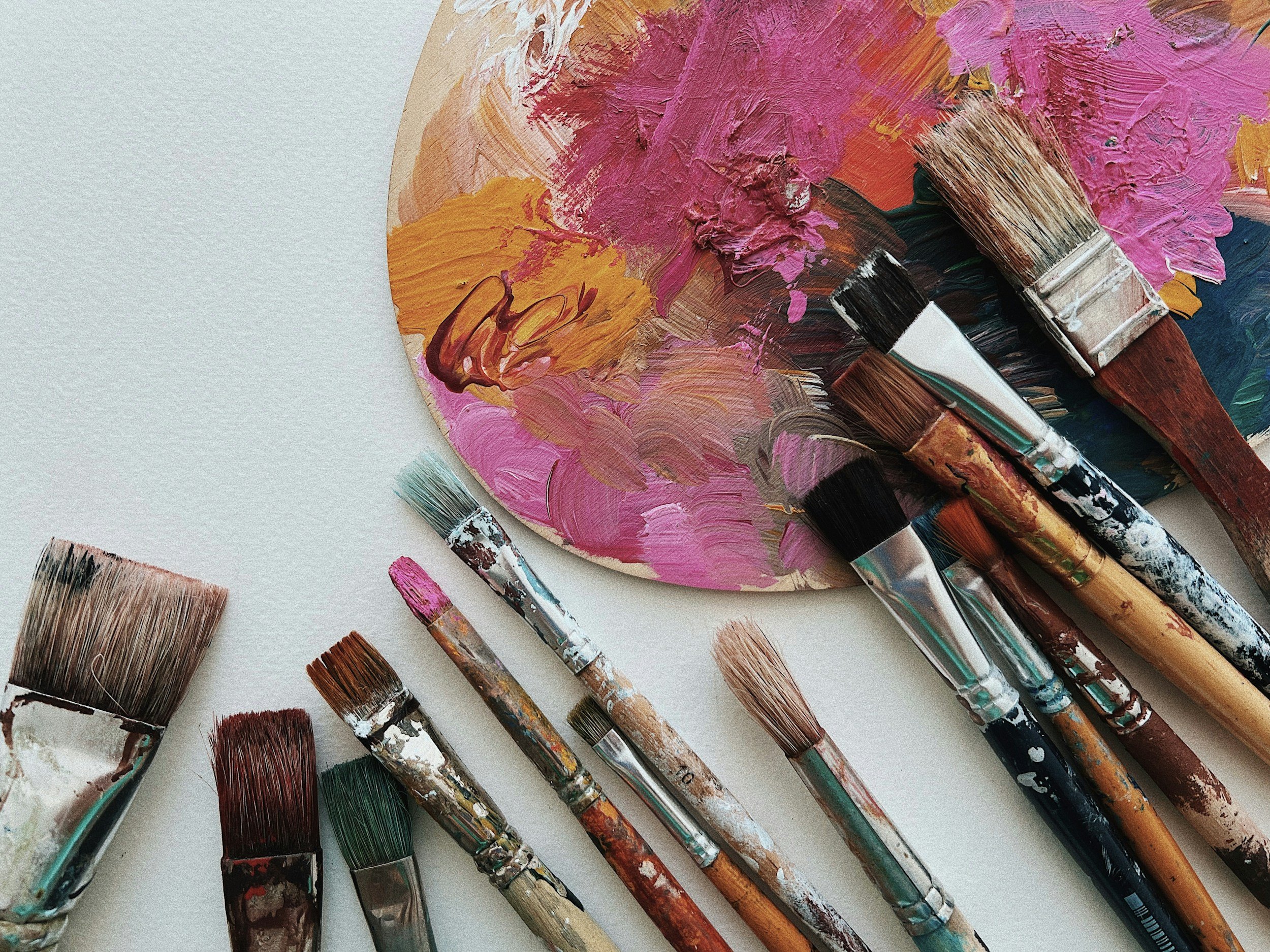
This one might sound obvious, but hear me out. I’m not just asking GPT what paint brands people like. I’m asking it to provide supplies reccomendations to solve very specific problems I ahve. For instance - “what is the most opaque shade of white gouache I can buy in any brand?” or “I’m looking for a super fine tip black pen that will work seamlessly on top of gouache, what would you suggest?”
Many of my problems these days as an artist come down to small details like this. I have a general idea of what I like to use, but I’m just looking to streamline my process. My tools are how I do what I do, so they’re important.
2. Generating Ideas
We’ve all been there, where we’re staring at a blank sheet of paper and can’t think of a single thing to paint. This is why I’ve long kept a running list of ideas so I’m never suffering from artist’s block. Well, now GPT has made things that much easier.
You can say, “My name is Nicole Cicak. I’m an illustrator. You can look up my website, socials, and Etsy shop links here. I need some new art ideas that will_______.” Fill in the blank with “sell well” or “challenge me” or “showcase my style.” You can even ask for how many ideas you need. It’s pretty amazing.
Ideas aren’t just limited to art either - you can ask for blog ideas, social content ideas, or Youtube video ideas.
3. Generating Inspirational Images
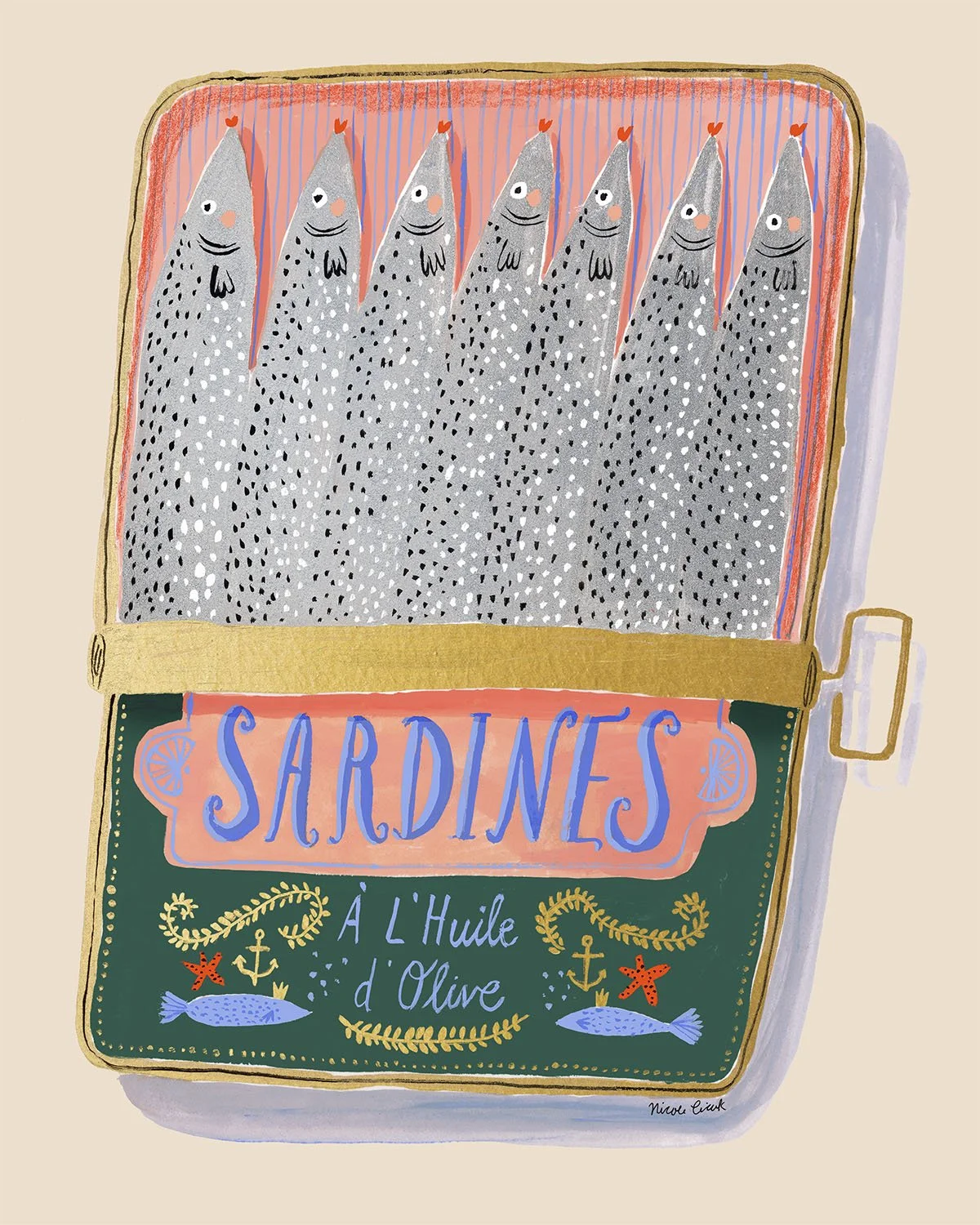
Let’s say I’m working on a painting of a vintage sardine can, which I recently did. I can ask GPT to show me some examples of vintage sardine cans. I can even ask for lighting preferences, or certain shapes of cans.
Or maybe you want to paint a still life. You can be very specific as to the kinds of inspirational photos you want to look at. For instance, I typed this in and here is the image I got.
“Can you create a still life photo for me to work from with muted colors, a striped tablecloth, and morning light with random classy household objects. I want something very sophisticated and understated.”
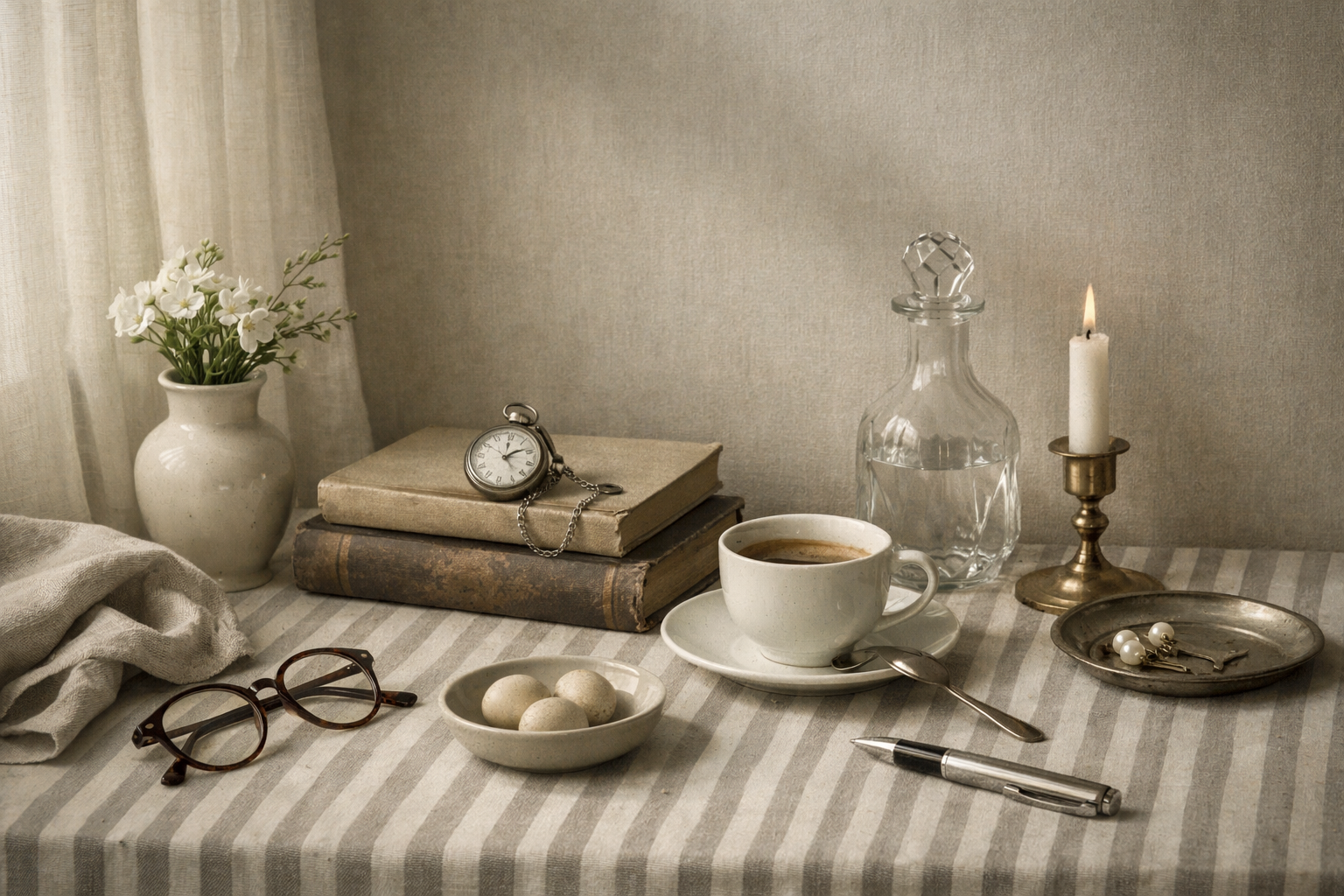
Now ask for a few more example photos, and suddenly you have a lot to work from. You can pull elements you like from each photo and add some of your own ideas too.
The idea is not to copy one image but to get a general consensus of what your final illustration could look like. Usually my work ends up looking nothing like these images, but I always feel more sure of myself when I’ve done this. And my brain feels full of ideas on how to tackle a certain subject matter.
This can be an especially useful tool for more obscure or specific subject matters that don’t have as many images online.
4. Asking for Business Advice
Being an artist these days is difficult, mainly because the market is so saturated. So how do you stand out? That’s a great question for GPT. I would, again, provide my name, website, socials, and shop links, and ask what I could work on to make more money as an artist. Or achieve whatever other goal I’m working towards.
It’s a great place to ask about what other artists have done too - artists who are further along in their journeys than you are.
GPT can even develop a tailored plan for how to tackle the following year to become a more successful artist, giving you daily tasks. Maybe you want to grow your social media. Well, GPT can tell you specifically how to do that. I know sometimes the toughest part is just figuring out where to spend your time. That’s a perfect question for GPT.
5. Learning the Industry Ropes
I wrote and illustrated a children’s book and I had no idea how to go about getting it published. For this endeavor, GPT was my best friend. Turns out, I hadn’t a clue what I was doing. AI helped me learn about top publishers in the industry, top agents, and just how the overall process works.
The crazy thing is, I succeeded. I eventually got a book deal with a really amazing publisher (which I have yet to talk about on here, because it’s still in the early stages). More on that soon! Point is, I credit much of my success to GPT helping me learn the ropes.
Maybe your goal is to get shown in a gallery, do more licensing, or to start a new podcast. GPT can tell you how all these things work.
6. Asking for Technical Advice
As many of you know, I was a graphic designer for 10 years before freelance illustrating full time in 2021. I know a lot about the Adobe programs, but not everything. I regularly get stumped and I’m always looking for ways to do things faster on my computer.
GPT has been an amazing help in solving my day to day tech problems. Just yesterday, some settings reset on my new scanner and I had no idea what was going on. GPT had an instant solution. I love this because I don’t want to spend all day solving technical problems. I want to spend time making art and GPT allows me to do that. My printers regularly give me problems too that GPT helps me solve.
7. Dealing with Sticky Situations
A few years ago, there was an artist online who was regularly copying my work. And they were stealing a lot of my sales on Etsy by selling at half the price of my art. I had no idea what to do about it. I even ended up talking to a lawyer. At the time, I wish I had GPT to explain copyright law to me and give me advice on how to handle the situation. I would have saved a lot of mental energy stressing about this.
I’ve since asked for advice on a number of other sticky situations, as we all face as artists. It usually talks me off a ledge and just makes me feel better going forward, even if the advice is often to do nothing.
8. Writing Messages
I consider myself a pretty good writer. However, I don’t want to spend my days writing e-mails as I often have to do regarding projects and working with clients. Often, my e-mails are short and I don’t need input from GPT.
However, for longer e-mails, I will write a quick pass and then input for a more refined version instead of combing over the e-mail and rewriting myself a bunch of times as I used to do.
GPT can also help you write social media responses, or even automated responses for your print shop.

9. Estimating Project Fees
When it comes to pricing, I wouldn’t treat ChatGPT as the bible. However, I can be really insecure about pricing (as most artists are), especially when working with a new client. It can be helpful to run numbers with GPT to give you the confidence you need to negotiate on your own behalf, especially if you don’t have an agent representing you.
To get the most accurate quotes, I would provide as much information as possible about the project - from how many pieces you will be making, how large the pieces are, what the deadline is, how long the project will take and what distribution looks like. Then I would provide as much information as you can about yourself - who you’ve worked with before, how many years experience, what you’ve charged for other projects.
I would never charge less than what GPT says, but I would always urge you to push higher if you feel like it’s quoting low. Use the numbers it provides you as a minimum. And remember, the client can always come back and say it’s too pricey and you can come down.
10. Giving You a List of Potential Brands/Clients to Work With
I’m trying to get better about chasing brands I want to work with in the limited time I have these days, so I recently asked GPT to give me a list of brands I should reach out to. You can even ask who to contact at those brands (although I would cross check the list with Linkedin since people move around a lot and GPT can be wrong about these things).
GPT can even write a customized e-mail you can send these brands, essentially taking marketing off your hands.
If you still don’t have a handle on how ChatGPT can make your life better as an artist, just ask it? Give it all your links and say “how can you help me become a more successful artist?” It will give you loads of ideas.
The big elephant in the room that I haven’t addressed yet is how I think AI will affect our future as artists. Try asking GPT to make work in your style (which I’ve done) and you’ll hopefully feel a lot better. It’s a long ways away from being able to do what we do. Any art created by GPT just feels “off” - too perfect, too calculated, not at all interesting.
I truly believe that when tech takes over the world (and pretty much every job in existence) the only thing left is creativity. The world will value artisans and creatives that much more. Because I think objects with a human touch, that you can see and feel in person will have so much more value. At least that’s what I hope - that AI will just be a tool we can use to make our jobs easier, but that it will never replace what we do. Because isn’t creativity the very thing that makes us human?
What do you think? And did I miss anything?


Thanks for stopping by! I’m an illustrator & writer. I’ve been running my own creative business since 2015. My mission is to help artists find their unique creative voice, build positive habits, and do what they love for a living.